
CRO Longevity & Navigating Organizational Transformation with Susan Rothwell
In this episode of the CRO Spotlight Podcast, Warren Zenna speaks with Susan Rothwell, Chief Revenue Officer at Simpli.fi. With a rare track record of longevity in the notoriously high-turnover ...CRO role, Susan unpacks her journey leading revenue organizations across multiple stages of evolution. She details how the CRO position has shifted from a glorified sales leader to a vital driver of operational excellence and corporate strategy.
Susan breaks down the mechanics of transforming legacy businesses, sharing actionable steps from her experience transitioning print-heavy models into integrated digital strategies. She emphasizes the importance of data-driven restructuring, specifically highlighting her approach to unifying siloed Go-to-Market teams. By verticalizing sales efforts, she demonstrates how to align complex organizational structures to better serve customers.
A core focus of this conversation is the critical alliance between the CEO and the CRO. Susan provides an honest look at her long-standing partnership with Simpli.fi CEO Cali Tran. She explains how initial friction evolved into a highly effective working relationship built on mutual trust, rigorous feedback, and complementary skill sets, offering a blueprint for revenue leaders seeking to establish strong alignment with their C-suite.
Finally, the discussion shifts to the integration of artificial intelligence within revenue operations. Susan advocates for leaning into AI to enhance productivity, streamline CRM systems, and eliminate administrative bottlenecks, while maintaining the essential human element in sales. This episode delivers a strategic playbook for current and aspiring CROs looking to drive sustainable growth and navigate complex organizational change.[+] Show More
Susan breaks down the mechanics of transforming legacy businesses, sharing actionable steps from her experience transitioning print-heavy models into integrated digital strategies. She emphasizes the importance of data-driven restructuring, specifically highlighting her approach to unifying siloed Go-to-Market teams. By verticalizing sales efforts, she demonstrates how to align complex organizational structures to better serve customers.
A core focus of this conversation is the critical alliance between the CEO and the CRO. Susan provides an honest look at her long-standing partnership with Simpli.fi CEO Cali Tran. She explains how initial friction evolved into a highly effective working relationship built on mutual trust, rigorous feedback, and complementary skill sets, offering a blueprint for revenue leaders seeking to establish strong alignment with their C-suite.
Finally, the discussion shifts to the integration of artificial intelligence within revenue operations. Susan advocates for leaning into AI to enhance productivity, streamline CRM systems, and eliminate administrative bottlenecks, while maintaining the essential human element in sales. This episode delivers a strategic playbook for current and aspiring CROs looking to drive sustainable growth and navigate complex organizational change.[+] Show More
active
CRO Longevity & Navigating Organizational Transformation with Susan Rothwell
In this episode of the CRO Spotlight Podcast, Warren Zenna speaks with ...
In this episode of the CRO Spotlight Podcast, Warren Zenna speaks with Susan Rothwell, Chief Revenue Officer at Simpli.fi. With a rare track record of longevity in the notoriously high-turnover ...CRO role, Susan unpacks her journey leading revenue organizations across multiple stages of evolution. She details how the CRO position has shifted from a glorified sales leader to a vital driver of operational excellence and corporate strategy.
Susan breaks down the mechanics of transforming legacy businesses, sharing actionable steps from her experience transitioning print-heavy models into integrated digital strategies. She emphasizes the importance of data-driven restructuring, specifically highlighting her approach to unifying siloed Go-to-Market teams. By verticalizing sales efforts, she demonstrates how to align complex organizational structures to better serve customers.
A core focus of this conversation is the critical alliance between the CEO and the CRO. Susan provides an honest look at her long-standing partnership with Simpli.fi CEO Cali Tran. She explains how initial friction evolved into a highly effective working relationship built on mutual trust, rigorous feedback, and complementary skill sets, offering a blueprint for revenue leaders seeking to establish strong alignment with their C-suite.
Finally, the discussion shifts to the integration of artificial intelligence within revenue operations. Susan advocates for leaning into AI to enhance productivity, streamline CRM systems, and eliminate administrative bottlenecks, while maintaining the essential human element in sales. This episode delivers a strategic playbook for current and aspiring CROs looking to drive sustainable growth and navigate complex organizational change.[+] Show More
Susan breaks down the mechanics of transforming legacy businesses, sharing actionable steps from her experience transitioning print-heavy models into integrated digital strategies. She emphasizes the importance of data-driven restructuring, specifically highlighting her approach to unifying siloed Go-to-Market teams. By verticalizing sales efforts, she demonstrates how to align complex organizational structures to better serve customers.
A core focus of this conversation is the critical alliance between the CEO and the CRO. Susan provides an honest look at her long-standing partnership with Simpli.fi CEO Cali Tran. She explains how initial friction evolved into a highly effective working relationship built on mutual trust, rigorous feedback, and complementary skill sets, offering a blueprint for revenue leaders seeking to establish strong alignment with their C-suite.
Finally, the discussion shifts to the integration of artificial intelligence within revenue operations. Susan advocates for leaning into AI to enhance productivity, streamline CRM systems, and eliminate administrative bottlenecks, while maintaining the essential human element in sales. This episode delivers a strategic playbook for current and aspiring CROs looking to drive sustainable growth and navigate complex organizational change.[+] Show More
active
Reality of Your First CRO Role & Funding Growth Through Savings with Eric Steele
Warren Zenna is joined by Eric Steele, CRO at SIB, to pull back the ...
Warren Zenna is joined by Eric Steele, CRO at SIB, to pull back the curtain on the often-chaotic reality of stepping into your first Chief Revenue Officer role. Eric shares ...why these initial appointments are rarely "sexy" and often come with significant organizational challenges that others might avoid. They discuss the mental shift required to move from a sales leader to a true executive, treating the first role as a critical lab for learning.
The conversation digs into the paramount relationship between the CRO and the CEO, which Eric describes as the ultimate unlock for success. He explains how to build a foundation of trust that allows for healthy disagreement and strategic alignment. By positioning yourself as an integrator of the CEO’s vision rather than just a department head, you can secure the autonomy and resources necessary to navigate the high-pressure environment of private equity.
Eric also highlights the strategic necessity of financial fluency, emphasizing that a CRO must speak the language of the CFO to be taken seriously. They discuss the common friction point of Revenue Operations and why this function must report to the revenue leader to drive growth rather than just board reporting. Eric argues that alignment on EBITDA and margins is just as important as hitting sales targets when you are operating at the C-suite level.
The episode concludes with a look at how SIB uses AI-driven "spend ontologies" to help companies find hidden capital. Eric describes how their SpendBrain technology identifies deep errors in invoices—from waste hauling to logistics—allowing CEOs to fund new hires and technology through recovered savings. By combining human expertise with "kinetic cost control," Eric shows how modern CROs can impact the bottom line by turning the tables on a spend-more world.[+] Show More
The conversation digs into the paramount relationship between the CRO and the CEO, which Eric describes as the ultimate unlock for success. He explains how to build a foundation of trust that allows for healthy disagreement and strategic alignment. By positioning yourself as an integrator of the CEO’s vision rather than just a department head, you can secure the autonomy and resources necessary to navigate the high-pressure environment of private equity.
Eric also highlights the strategic necessity of financial fluency, emphasizing that a CRO must speak the language of the CFO to be taken seriously. They discuss the common friction point of Revenue Operations and why this function must report to the revenue leader to drive growth rather than just board reporting. Eric argues that alignment on EBITDA and margins is just as important as hitting sales targets when you are operating at the C-suite level.
The episode concludes with a look at how SIB uses AI-driven "spend ontologies" to help companies find hidden capital. Eric describes how their SpendBrain technology identifies deep errors in invoices—from waste hauling to logistics—allowing CEOs to fund new hires and technology through recovered savings. By combining human expertise with "kinetic cost control," Eric shows how modern CROs can impact the bottom line by turning the tables on a spend-more world.[+] Show More
active
What Actors and Sales Reps Have in Common with Miya Mee-Lee Dias
In this episode of the CRO Spotlight, Warren Zenna sits down with Miya ...
In this episode of the CRO Spotlight, Warren Zenna sits down with Miya Mee-Lee Dias, Co-Founder of Beyond The Script, to discuss a transformative approach to sales training. Miya shares ...her unique background blending health science with performance arts, explaining how traditional methodologies often fail because they ignore the human element. She introduces the concept of the "sales gym," where reps practice role-plays like actors preparing for a scene, stripping away bad habits to build authentic character and confidence in their delivery.
Warren and Miya dive deep into the parallels between professional acting and high-performance sales. They explore the idea that every salesperson brings personal "baggage" and history that influences their communication style. Miya explains that true proficiency isn't about memorizing lines but about internalizing the script to project a genuine persona. The conversation highlights the importance of adaptability, showing how top performers maintain a "beginner's mind" and remain open to molding their approach regardless of their experience level.
A critical portion of the discussion centers on the elusive trait of coachability. Miya reveals her methods for identifying whether a rep is truly ready to learn, often spotting resistance through subtle cues like tone of voice and body language. The dialogue challenges Revenue Leaders to look beyond metrics and address the holistic human factors driving performance. They discuss the necessity of understanding a rep’s intrinsic motivations and personal history to unlock their full potential and drive sustainable behavioral change.
As technology automates more transactional aspects of business, Warren and Miya argue that human connection and emotional intelligence are becoming the ultimate competitive advantages. They emphasize that modern CROs must develop the "muscle" to have difficult, personal conversations with their teams to foster trust and growth. The episode concludes with a look at the intersection of creativity and business, encouraging leaders to embrace a coaching mindset that empowers their organizations through genuine human development.[+] Show More
Warren and Miya dive deep into the parallels between professional acting and high-performance sales. They explore the idea that every salesperson brings personal "baggage" and history that influences their communication style. Miya explains that true proficiency isn't about memorizing lines but about internalizing the script to project a genuine persona. The conversation highlights the importance of adaptability, showing how top performers maintain a "beginner's mind" and remain open to molding their approach regardless of their experience level.
A critical portion of the discussion centers on the elusive trait of coachability. Miya reveals her methods for identifying whether a rep is truly ready to learn, often spotting resistance through subtle cues like tone of voice and body language. The dialogue challenges Revenue Leaders to look beyond metrics and address the holistic human factors driving performance. They discuss the necessity of understanding a rep’s intrinsic motivations and personal history to unlock their full potential and drive sustainable behavioral change.
As technology automates more transactional aspects of business, Warren and Miya argue that human connection and emotional intelligence are becoming the ultimate competitive advantages. They emphasize that modern CROs must develop the "muscle" to have difficult, personal conversations with their teams to foster trust and growth. The episode concludes with a look at the intersection of creativity and business, encouraging leaders to embrace a coaching mindset that empowers their organizations through genuine human development.[+] Show More
active
How Smarter Buyers are Forcing a Go-To-Market Evolution with Guy Rubin
In this live episode of the CRO Spotlight Podcast, Warren sits down ...
In this live episode of the CRO Spotlight Podcast, Warren sits down with Guy Rubin to discuss the recent acquisition of Ebsta by Fullcast and what it signals for the ...market. Guy explains the strategic reasoning behind the consolidation, highlighting how the current landscape of disparate point solutions is becoming unsustainable. He argues that the future belongs to unified revenue platforms that connect data across the entire lifecycle, moving from a fragmented tech stack to a cohesive "plan to pay" model that drives true efficiency.
The conversation shifts to the broader Go-To-Market environment, where the cost of building tech is dropping while the cost of selling rises. Guy points out that while AI tools are exploding, they often create more noise than value when isolated. He predicts a massive consolidation where businesses move away from traditional CRMs requiring manual entry toward intelligent data lakes and AI agents. This shift requires leaders to learn how to ask the right questions of their data rather than simply managing administrative forms.
Warren and Guy also explore the dramatic shift in buyer behavior, illustrated by how AI empowers customers to conduct deep research before ever speaking to a human. With buyers capable of building their own business cases, the role of the seller must evolve from a gatekeeper of information to a consultative partner. They discuss why this dynamic forces organizations to lean heavily into partner ecosystems and community validation, as buyers increasingly bypass traditional sales pitches to seek out trusted peer networks.
Finally, they dig into strategies for CROs and Private Equity firms looking to audit their revenue engines. Guy introduces "Revenue Insights as a Service," a method of connecting to historical data to generate an immediate "X-ray" of the business before implementing new tech. This allows leaders to identify root causes of inefficiency—like bad data hygiene or territory imbalances—and present concrete, data-backed roadmaps to the C-suite for rapid improvement without waiting months for a new system implementation.[+] Show More
The conversation shifts to the broader Go-To-Market environment, where the cost of building tech is dropping while the cost of selling rises. Guy points out that while AI tools are exploding, they often create more noise than value when isolated. He predicts a massive consolidation where businesses move away from traditional CRMs requiring manual entry toward intelligent data lakes and AI agents. This shift requires leaders to learn how to ask the right questions of their data rather than simply managing administrative forms.
Warren and Guy also explore the dramatic shift in buyer behavior, illustrated by how AI empowers customers to conduct deep research before ever speaking to a human. With buyers capable of building their own business cases, the role of the seller must evolve from a gatekeeper of information to a consultative partner. They discuss why this dynamic forces organizations to lean heavily into partner ecosystems and community validation, as buyers increasingly bypass traditional sales pitches to seek out trusted peer networks.
Finally, they dig into strategies for CROs and Private Equity firms looking to audit their revenue engines. Guy introduces "Revenue Insights as a Service," a method of connecting to historical data to generate an immediate "X-ray" of the business before implementing new tech. This allows leaders to identify root causes of inefficiency—like bad data hygiene or territory imbalances—and present concrete, data-backed roadmaps to the C-suite for rapid improvement without waiting months for a new system implementation.[+] Show More
active
Sales Transformation & Customer-Centric Revenue with Dr. Grant Van Ulbrich
In this episode, Warren speaks with Dr. Grant Van Ulbrich, the world’s ...
In this episode, Warren speaks with Dr. Grant Van Ulbrich, the world’s first doctor of Sales Transformation. They discuss a critical gap in the modern revenue landscape: while other business ...functions have deep academic rigor, sales education has remained largely stagnant since the 1980s. Grant explains why traditional "tips and tricks" no longer work on informed buyers and why a shift from transactional interactions to genuine value alignment is necessary for business survival.
The conversation dives into the psychology of change and Grant’s "Scared So What" methodology. Most leaders manage operations, not emotions, yet sales is fundamentally an act of imposing change. Grant breaks down how understanding personal reactions to change allows revenue leaders to move from simply telling teams what to do to empowering them through transformational leadership. This approach helps teams navigate the fear of new strategies and structures.
Grant shares insights from the global cruise industry, revealing how shifting focus from internal agendas to customer needs dramatically improved sales effectiveness. He highlights the dangers of "product dumping" and the importance of co-creation. By treating sales as a coaching opportunity rather than a coercion tactic, organizations can align internal culture with the external customer experience to ensure a consistent brand promise across all channels.
Finally, the discussion offers actionable advice for CEOs and CROs on navigating organizational restructuring. They explore why high-performing individual contributors often struggle in leadership roles without the right psychological tools. This episode is essential for executives looking to modernize their go-to-market strategy, foster a culture of ownership among their teams, and utilize science-backed frameworks to drive sustainable revenue growth.[+] Show More
The conversation dives into the psychology of change and Grant’s "Scared So What" methodology. Most leaders manage operations, not emotions, yet sales is fundamentally an act of imposing change. Grant breaks down how understanding personal reactions to change allows revenue leaders to move from simply telling teams what to do to empowering them through transformational leadership. This approach helps teams navigate the fear of new strategies and structures.
Grant shares insights from the global cruise industry, revealing how shifting focus from internal agendas to customer needs dramatically improved sales effectiveness. He highlights the dangers of "product dumping" and the importance of co-creation. By treating sales as a coaching opportunity rather than a coercion tactic, organizations can align internal culture with the external customer experience to ensure a consistent brand promise across all channels.
Finally, the discussion offers actionable advice for CEOs and CROs on navigating organizational restructuring. They explore why high-performing individual contributors often struggle in leadership roles without the right psychological tools. This episode is essential for executives looking to modernize their go-to-market strategy, foster a culture of ownership among their teams, and utilize science-backed frameworks to drive sustainable revenue growth.[+] Show More
active
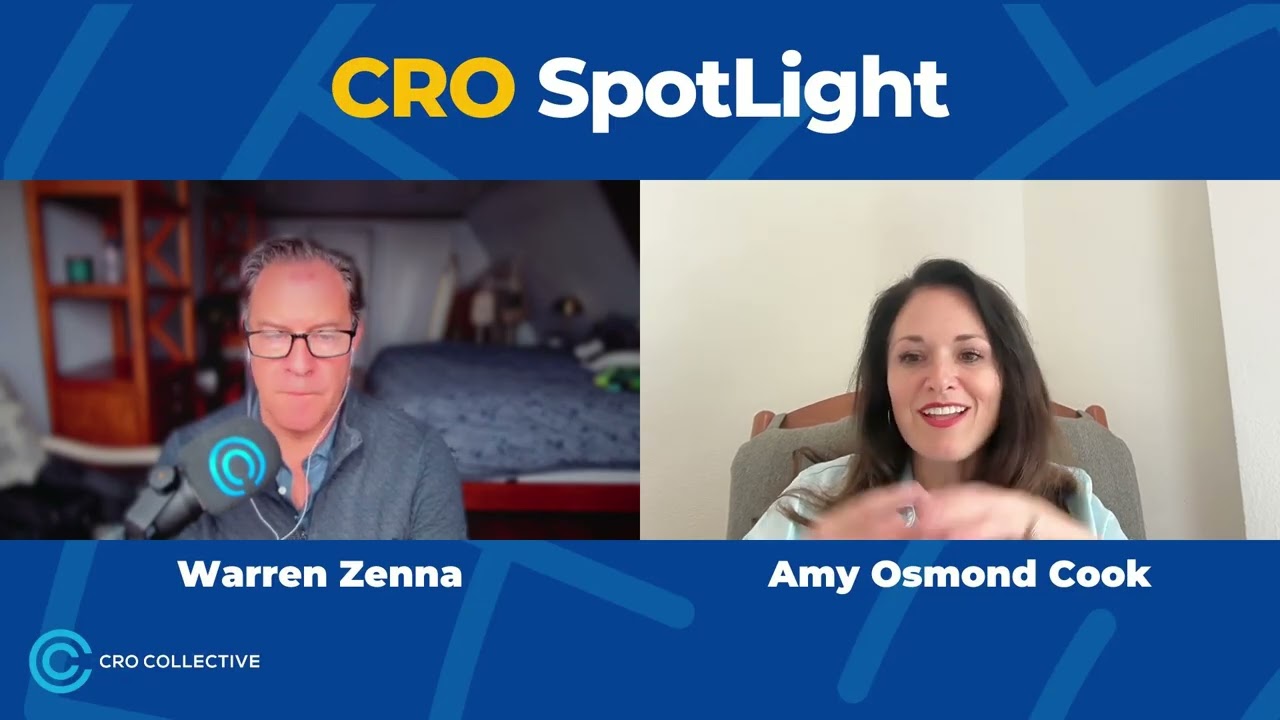
Balancing an AI-Native Strategy with Human Connection with Amy Osmond Cook
In this episode of the CRO Spotlight Podcast, Warren Zenna sits down ...
In this episode of the CRO Spotlight Podcast, Warren Zenna sits down with Amy Osmond Cook, Co-Founder and CMO at Fullcast, to tackle the pressing challenge of balancing AI innovation ...with authentic human connection. As revenue leaders race to adopt AI-native strategies, the risk of losing trust through impersonal automation grows. Amy shares her perspective on why technology should enhance, not replace, the creative human element in Go-To-Market motions, setting the stage for a discussion on modern leadership.
Amy details the evolution of Fullcast into a comprehensive Revenue Operations platform through strategic acquisitions like Ebsta and Copy.ai. She explains how these moves allowed the company to build a fully AI-native sales performance management solution. By integrating territory planning, forecasting, and analytics, Fullcast aims to solve the fragmented tech stack issue. Amy outlines the vision behind merging these capabilities to support mid-market and enterprise revenue teams effectively.
Integrating multiple companies is a complex operational challenge. Amy discusses the nuances of merging distinct cultures and leadership styles into one cohesive organization. She emphasizes the importance of clear communication, defined playbooks, and celebrating wins to align distributed teams. Her insights provide a practical blueprint for leaders managing growth through acquisition while striving to maintain a unified company identity and shared purpose across international borders.
Finally, the dialogue covers the evolving landscape for revenue leaders. Warren and Amy examine the pressure on CROs to adopt AI strategies while relying on experience to guide decision-making. Amy explains how Fullcast meets customers where they are, offering flexible solutions for their specific needs. Listeners will gain a deeper understanding of the skills required to lead in the current market and how to navigate the intersection of data and intuition successfully.[+] Show More
Amy details the evolution of Fullcast into a comprehensive Revenue Operations platform through strategic acquisitions like Ebsta and Copy.ai. She explains how these moves allowed the company to build a fully AI-native sales performance management solution. By integrating territory planning, forecasting, and analytics, Fullcast aims to solve the fragmented tech stack issue. Amy outlines the vision behind merging these capabilities to support mid-market and enterprise revenue teams effectively.
Integrating multiple companies is a complex operational challenge. Amy discusses the nuances of merging distinct cultures and leadership styles into one cohesive organization. She emphasizes the importance of clear communication, defined playbooks, and celebrating wins to align distributed teams. Her insights provide a practical blueprint for leaders managing growth through acquisition while striving to maintain a unified company identity and shared purpose across international borders.
Finally, the dialogue covers the evolving landscape for revenue leaders. Warren and Amy examine the pressure on CROs to adopt AI strategies while relying on experience to guide decision-making. Amy explains how Fullcast meets customers where they are, offering flexible solutions for their specific needs. Listeners will gain a deeper understanding of the skills required to lead in the current market and how to navigate the intersection of data and intuition successfully.[+] Show More
active
Vetting the CRO Role & Avoiding the "VP of Sales" Trap with Mike Price
In this episode, Warren Zenna sits down with Mike Price, CRO at DTEX ...
In this episode, Warren Zenna sits down with Mike Price, CRO at DTEX Systems, to explore the critical evolution from a functional salesperson to a holistic business leader. Mike shares ...his unique journey, influenced by an entrepreneurial upbringing, and discusses why successful CROs must view themselves as business executives first. He argues that while sales skills are foundational, the ability to understand the broader mechanics of an organization is what truly defines the modern revenue leader.
A significant portion of the conversation is dedicated to the art of vetting a potential CRO opportunity. Mike provides actionable advice on how to interview the CEO, specifically regarding the company’s readiness for a true Chief Revenue Officer. He warns against accepting roles that are merely "VP of Sales" with a different title and emphasizes the importance of asking why the organization believes it needs a CRO right now. This advice is vital for executives ensuring they enter an environment ready for strategic change.
The discussion also delves into the paradox of ambition and control. Mike explains that true executive maturity involves the willingness to cede control to a specialized team rather than being the smartest person in the room. He draws a compelling parallel to professional sports, noting that one must love the entire "game"—including practice and preparation—not just the moments of individual glory. This mindset shift is essential for leaders who want to build autonomous, high-performing teams.
Finally, the dialogue covers the necessity of experimentation and reframing failure as a necessary step toward innovation. Mike shares insights on creating an environment where strategic risks are encouraged to drive growth. To close, he outlines his current work at DTEX Systems, addressing the "last frontier" of cybersecurity: insider risk management. He explains how understanding human behavior within an organization is key to protecting intellectual property and ensuring long-term business resilience.[+] Show More
A significant portion of the conversation is dedicated to the art of vetting a potential CRO opportunity. Mike provides actionable advice on how to interview the CEO, specifically regarding the company’s readiness for a true Chief Revenue Officer. He warns against accepting roles that are merely "VP of Sales" with a different title and emphasizes the importance of asking why the organization believes it needs a CRO right now. This advice is vital for executives ensuring they enter an environment ready for strategic change.
The discussion also delves into the paradox of ambition and control. Mike explains that true executive maturity involves the willingness to cede control to a specialized team rather than being the smartest person in the room. He draws a compelling parallel to professional sports, noting that one must love the entire "game"—including practice and preparation—not just the moments of individual glory. This mindset shift is essential for leaders who want to build autonomous, high-performing teams.
Finally, the dialogue covers the necessity of experimentation and reframing failure as a necessary step toward innovation. Mike shares insights on creating an environment where strategic risks are encouraged to drive growth. To close, he outlines his current work at DTEX Systems, addressing the "last frontier" of cybersecurity: insider risk management. He explains how understanding human behavior within an organization is key to protecting intellectual property and ensuring long-term business resilience.[+] Show More
active
Building the Machine & Guarding the Culture with Christian Gerron
In this episode of CRO Spotlight, Warren Zenna sits down with ...
In this episode of CRO Spotlight, Warren Zenna sits down with Christian Gerron, Chief Revenue Officer at StackAdapt. They dive into the complexities of the programmatic ad tech space, a ...market saturated with thousands of players. Christian explains how StackAdapt differentiates itself by moving beyond a simple DSP to become a unified "operating system," helping marketers reduce friction and increase ROI by integrating first-party data, programmatic, and measurement tools in one platform.
Christian shares his unconventional journey into the C-suite, starting his career in finance at Microsoft before transitioning to sales and operations. He defines the CRO role not as a "super seller" but as an operator responsible for building and tuning the entire revenue "machine." This connected ecosystem includes sales, client services, analytics, and RevOps, all working in unison. He discusses why the authority to execute and drive impact is the true motivator for top revenue leaders.
How do you execute in such a cutthroat market? Christian details the GTM transformation at StackAdapt. He describes moving the team from a generalist approach—where everyone targeted the same high-value territories—to a specialized and segmented model. By implementing focused territories, specializing by vertical (like B2B or healthcare), and splitting teams into "hunters" (new business) and "farmers" (account growth), the revenue org achieved faster, more efficient growth.
Christian emphasizes that talent and culture are the ultimate differentiators. At StackAdapt, the hiring process is designed to find functional competency while actively filtering out "politics players" to protect a culture of trust and speed. He concludes with powerful advice for both aspiring CROs (focus on operational rigor and talent) and the CEOs hiring them (find a true "business leader" who thinks in systems, and then give them the autonomy to build the machine).[+] Show More
Christian shares his unconventional journey into the C-suite, starting his career in finance at Microsoft before transitioning to sales and operations. He defines the CRO role not as a "super seller" but as an operator responsible for building and tuning the entire revenue "machine." This connected ecosystem includes sales, client services, analytics, and RevOps, all working in unison. He discusses why the authority to execute and drive impact is the true motivator for top revenue leaders.
How do you execute in such a cutthroat market? Christian details the GTM transformation at StackAdapt. He describes moving the team from a generalist approach—where everyone targeted the same high-value territories—to a specialized and segmented model. By implementing focused territories, specializing by vertical (like B2B or healthcare), and splitting teams into "hunters" (new business) and "farmers" (account growth), the revenue org achieved faster, more efficient growth.
Christian emphasizes that talent and culture are the ultimate differentiators. At StackAdapt, the hiring process is designed to find functional competency while actively filtering out "politics players" to protect a culture of trust and speed. He concludes with powerful advice for both aspiring CROs (focus on operational rigor and talent) and the CEOs hiring them (find a true "business leader" who thinks in systems, and then give them the autonomy to build the machine).[+] Show More
active
Leadership Structures & AI at $1B Scale with Steven Birdsall
In this CRO Spotlight episode, host Warren Zenna sits down with Steven ...
In this CRO Spotlight episode, host Warren Zenna sits down with Steven Birdsall, CRO at Alteryx, to unpack a sweeping leadership transition and how a newly formed C‑suite aligned on ...product and go‑to‑market. Steven shares how a product‑centric CEO and a servant‑leader CRO combine to create clarity of mandate, performance culture, and human‑first execution across sales, CS, partners, and solutions engineering.
The conversation dives deep into Alteryx’s evolution from workflows feeding BI to becoming the governed “canvas” for AI and agent use cases. Steven explains how business users can blend structured and unstructured data, enforce governance and access controls, and then safely bring LLMs into the same environment—pushing compute down to cloud data platforms like BigQuery, Databricks, and Snowflake.
For CROs, Steven details practical AI operationalization: SDR personalization at scale, three‑dimensional agents trained on company knowledge, and revenue insights built directly on internal data. He outlines how to raise sales efficiency without scaling opex linearly, and why fast experimentation with new AI tools is now core to modern GTM orchestration.
Steven closes with hiring and leadership principles for today’s CRO: prioritize grit, perseverance, and customer centricity over pedigree; remove roadblocks for the field; and mentor generously. He shares how to balance data‑driven rigor with empathy, build alignment with marketing regardless of reporting lines, and stay entrepreneurial—even inside a large, complex organization.[+] Show More
The conversation dives deep into Alteryx’s evolution from workflows feeding BI to becoming the governed “canvas” for AI and agent use cases. Steven explains how business users can blend structured and unstructured data, enforce governance and access controls, and then safely bring LLMs into the same environment—pushing compute down to cloud data platforms like BigQuery, Databricks, and Snowflake.
For CROs, Steven details practical AI operationalization: SDR personalization at scale, three‑dimensional agents trained on company knowledge, and revenue insights built directly on internal data. He outlines how to raise sales efficiency without scaling opex linearly, and why fast experimentation with new AI tools is now core to modern GTM orchestration.
Steven closes with hiring and leadership principles for today’s CRO: prioritize grit, perseverance, and customer centricity over pedigree; remove roadblocks for the field; and mentor generously. He shares how to balance data‑driven rigor with empathy, build alignment with marketing regardless of reporting lines, and stay entrepreneurial—even inside a large, complex organization.[+] Show More
active
Value Engineering & The ROI Discovery Process with Mike Genstil
In this episode of the CRO Spotlight, Warren Zenna welcomes Mike ...
In this episode of the CRO Spotlight, Warren Zenna welcomes Mike Genstil, CEO at ValueCore, to discuss a critical inefficiency in modern sales: the "value gap." Mike explains that too ...often, sellers rush to provide a price quote while buyers remain fixated on features, rather than starting the conversation by aligning on the specific problems the organization faces and what those problems are costing them.
Warren and Mike explore why "value engineering" isn't commonplace. Mike contrasts the role with the ubiquitous Sales Engineer. While organizations readily invest in Sales Engineers for technical validation, the Value Engineer—who handles the business validation—is often scarce and stretched thin. Mike argues this function is critical for justifying high-ticket solutions to a buying committee and proving impact beyond just features.
The conversation shifts to the process of value engineering, which Mike describes as the most effective form of sales discovery. He outlines the four key buckets that Value Engineers analyze to build a business case that resonates with a CFO: hard cost savings, team productivity gains, revenue acceleration (such as customer acquisition or retention), and strategic risk mitigation. This diligence helps the buyer champion the solution internally.
Finally, Mike discusses how technology platforms are making value engineering more scalable and integrated. He explains how AI can rapidly analyze public data, case studies, and even call recordings to build robust models. This technology allows pre-sales and post-sales teams to collaborate on value. They also cover how a strong value framework is essential for managing Proof of Concepts (POCs), preventing "tire-kickers" by agreeing on success metrics upfront.[+] Show More
Warren and Mike explore why "value engineering" isn't commonplace. Mike contrasts the role with the ubiquitous Sales Engineer. While organizations readily invest in Sales Engineers for technical validation, the Value Engineer—who handles the business validation—is often scarce and stretched thin. Mike argues this function is critical for justifying high-ticket solutions to a buying committee and proving impact beyond just features.
The conversation shifts to the process of value engineering, which Mike describes as the most effective form of sales discovery. He outlines the four key buckets that Value Engineers analyze to build a business case that resonates with a CFO: hard cost savings, team productivity gains, revenue acceleration (such as customer acquisition or retention), and strategic risk mitigation. This diligence helps the buyer champion the solution internally.
Finally, Mike discusses how technology platforms are making value engineering more scalable and integrated. He explains how AI can rapidly analyze public data, case studies, and even call recordings to build robust models. This technology allows pre-sales and post-sales teams to collaborate on value. They also cover how a strong value framework is essential for managing Proof of Concepts (POCs), preventing "tire-kickers" by agreeing on success metrics upfront.[+] Show More
active
From BDR to CRO: Building Cross-Functional GTM with Michael Maimone
Warren Zenna sits down with Michael Maimone, CRO at LucidLink, to ...
Warren Zenna sits down with Michael Maimone, CRO at LucidLink, to unpack his journey from BDR to enterprise sales leader to CRO. Michael shares how his time at IBM, Marketo, ...Adobe, and ZoomInfo shaped a systems mindset, enabling him to translate big-company rigor into agile, early-stage execution without stifling momentum.
They dive into the first 30-60-90 days in the seat: observe, diagnose, implement. Michael explains how he sequenced quick wins—enablement, RevOps guardrails, hiring profiles, interview kits—before rolling out robust territory, account, and opportunity planning. He emphasizes credibility through results and the art of modulation when change-managing seasoned teams.
Michael details LucidLink’s category-defining approach to distributed cloud file access for massive media and design workflows, and how that expands into broader enterprise use cases. He outlines direct and channel motions, global team structure, and the zero-knowledge security model that unlocks collaboration without compromising control.
The conversation closes with pragmatic AI adoption across Gong, ZoomInfo, dialers, website conversion, and Gemini-driven planning. Michael shares early signal lifts, how to beat tool fatigue, why human analysts still matter, and advice to aspiring CROs: lead cross-functionally, stay humble, build lieutenants, and align every motion to predictable, scalable revenue.[+] Show More
They dive into the first 30-60-90 days in the seat: observe, diagnose, implement. Michael explains how he sequenced quick wins—enablement, RevOps guardrails, hiring profiles, interview kits—before rolling out robust territory, account, and opportunity planning. He emphasizes credibility through results and the art of modulation when change-managing seasoned teams.
Michael details LucidLink’s category-defining approach to distributed cloud file access for massive media and design workflows, and how that expands into broader enterprise use cases. He outlines direct and channel motions, global team structure, and the zero-knowledge security model that unlocks collaboration without compromising control.
The conversation closes with pragmatic AI adoption across Gong, ZoomInfo, dialers, website conversion, and Gemini-driven planning. Michael shares early signal lifts, how to beat tool fatigue, why human analysts still matter, and advice to aspiring CROs: lead cross-functionally, stay humble, build lieutenants, and align every motion to predictable, scalable revenue.[+] Show More
active
AI Hype VS Reality with Ryan Staley
Warren Zenna hosts Ryan Staley, Founder and CEO at Whale Boss, to ...
Warren Zenna hosts Ryan Staley, Founder and CEO at Whale Boss, to separate AI spectacle from strategic value for revenue leaders. They explore where the technology truly helps CROs versus ...where demos overpromise, and how practitioners can spot durable use cases. Ryan frames adoption as a pragmatic process focused on measurable outcomes rather than chasing every shiny new feature.
They map three practical stages of AI adoption—augmentation, targeted automation, and cross‑functional orchestration—and show how each raises team capacity. Ryan gives concrete examples like automated call scoring that produces next‑best actions, converting call transcripts into playbook inputs, and feeding live sales insights to marketing and product to guide priorities and messaging.
The conversation tackles workforce impact and essential skills: which roles are most exposed, where leaders should retool, and why structured prompting remains a competitive advantage. Ryan stresses validating outputs to reduce hallucinations and recommends methods—multiple source checks and reverse‑engineering high‑performing content—to ensure AI-driven recommendations are reliable before operationalizing them.
For CROs and CEOs ready to move, Ryan advises starting with daily personal use, identifying a few high‑value pilots, and scaling proven projects across teams. Warren and Ryan outline a practical rollout cadence that builds momentum without disruption. Listeners leave with a clear roadmap to integrate AI into revenue operations and pointers to connect with Ryan on LinkedIn for prompts and resources.[+] Show More
They map three practical stages of AI adoption—augmentation, targeted automation, and cross‑functional orchestration—and show how each raises team capacity. Ryan gives concrete examples like automated call scoring that produces next‑best actions, converting call transcripts into playbook inputs, and feeding live sales insights to marketing and product to guide priorities and messaging.
The conversation tackles workforce impact and essential skills: which roles are most exposed, where leaders should retool, and why structured prompting remains a competitive advantage. Ryan stresses validating outputs to reduce hallucinations and recommends methods—multiple source checks and reverse‑engineering high‑performing content—to ensure AI-driven recommendations are reliable before operationalizing them.
For CROs and CEOs ready to move, Ryan advises starting with daily personal use, identifying a few high‑value pilots, and scaling proven projects across teams. Warren and Ryan outline a practical rollout cadence that builds momentum without disruption. Listeners leave with a clear roadmap to integrate AI into revenue operations and pointers to connect with Ryan on LinkedIn for prompts and resources.[+] Show More
active
GTM Differentiation & Decision Velocity with Amy Hsuan
Warren Zenna sits down with Amy Hsuan, Chief Customer & Revenue ...
Warren Zenna sits down with Amy Hsuan, Chief Customer & Revenue Officer at Mixpanel, to unpack what a truly unified revenue engine looks like. Amy shares how org design must ...follow strategy, why GTM is a core differentiator, and how aligning marketing, sales, success, and services creates consistent end‑to‑end customer experiences that actually win.
Amy traces her path from journalism to BCG to Mixpanel, revealing how curiosity, cross‑functional leadership, and a customer‑first mindset shaped her Chief Customer & Revenue Officer role. She explains the shift from “hard” product differentiation to human‑driven trust, and how relationships, not features, become defensible moats in crowded markets.
They dig into practical playbooks: orchestrating handoffs, clarifying tone across touchpoints, and reducing executive silos to move faster. Amy outlines a strategy‑to‑execution flywheel, her 80/20 time model for long‑ vs short‑term, and how consistent advisory through complex, multi‑stakeholder cycles sustains momentum and predictability.
Amy also shares a grounded view on AI: use it to accelerate research, analysis, and context so leaders increase decision velocity—while humans own listening, rapport, creative adaptation, and navigating org dynamics. If you’re a CRO, aspiring CRO, or CEO aiming to modernize revenue leadership, this conversation is a blueprint.[+] Show More
Amy traces her path from journalism to BCG to Mixpanel, revealing how curiosity, cross‑functional leadership, and a customer‑first mindset shaped her Chief Customer & Revenue Officer role. She explains the shift from “hard” product differentiation to human‑driven trust, and how relationships, not features, become defensible moats in crowded markets.
They dig into practical playbooks: orchestrating handoffs, clarifying tone across touchpoints, and reducing executive silos to move faster. Amy outlines a strategy‑to‑execution flywheel, her 80/20 time model for long‑ vs short‑term, and how consistent advisory through complex, multi‑stakeholder cycles sustains momentum and predictability.
Amy also shares a grounded view on AI: use it to accelerate research, analysis, and context so leaders increase decision velocity—while humans own listening, rapport, creative adaptation, and navigating org dynamics. If you’re a CRO, aspiring CRO, or CEO aiming to modernize revenue leadership, this conversation is a blueprint.[+] Show More
active
The Art and Science of Sales Compensation Plans with Dana Therrien
In this episode of CRO Spotlight, Warren Zenna welcomes back Dana ...
In this episode of CRO Spotlight, Warren Zenna welcomes back Dana Therrien, Vice President at Anaplan and a leading expert in sales compensation strategies. Dana shares his insights on designing ...simple yet effective comp plans that motivate sales teams while aligning with company goals and customer success. He emphasizes the importance of balancing short-term wins with long-term growth.
Dana dives into the pitfalls of overly complex compensation plans, explaining how they demotivate sales teams and create inefficiencies. He highlights the need for clear, straightforward incentives that salespeople can easily understand and act on. Dana also discusses how CROs can navigate the challenges of managing comp plans while ensuring alignment across finance, product, and customer success teams.
The conversation explores how compensation plans impact customer experience, with Dana sharing innovative strategies like tying payouts to customer adoption and retention. He explains how this approach not only drives better outcomes for customers but also fosters sustainable growth for the business.
Dana wraps up with actionable advice for CROs, including the importance of creating a compensation governance council, leveraging AI for smarter decision-making, and piloting changes before rolling them out. This episode is packed with practical tips for CROs and revenue leaders looking to optimize their comp plans and drive success.[+] Show More
Dana dives into the pitfalls of overly complex compensation plans, explaining how they demotivate sales teams and create inefficiencies. He highlights the need for clear, straightforward incentives that salespeople can easily understand and act on. Dana also discusses how CROs can navigate the challenges of managing comp plans while ensuring alignment across finance, product, and customer success teams.
The conversation explores how compensation plans impact customer experience, with Dana sharing innovative strategies like tying payouts to customer adoption and retention. He explains how this approach not only drives better outcomes for customers but also fosters sustainable growth for the business.
Dana wraps up with actionable advice for CROs, including the importance of creating a compensation governance council, leveraging AI for smarter decision-making, and piloting changes before rolling them out. This episode is packed with practical tips for CROs and revenue leaders looking to optimize their comp plans and drive success.[+] Show More
active
Target Accounts, Intent Signals & Marketing Alignment with Jaime Ruhl
Jaime Ruhl, CRO at Emergn, joins Warren Zenna to explore how a sales ...

Jaime Ruhl, CRO at Emergn, joins Warren Zenna to explore how a sales leader becomes a strategic revenue architect in a product‑centric consulting firm. She explains stepping into a broader ...remit that covers sales, go‑to‑market and marketing alignment across global teams. Jaime describes being a player‑coach who builds repeatable sales motion and champions measurable customer outcomes after delivery.
Jaime digs into practical moves she led: shifting from sporadic lead chasing to a disciplined target account approach, tightening qualification at the funnel entrance, and leveraging intent signals, account reports and smarter prospecting tools. She describes building persona‑led outreach, thought leadership assets, and repeatable playbooks that scale account expansion and shorten cycles. Jaime also tightened lead handoff timing and aligned content cadence with selling motions.
This episode contrasts consulting revenue with pure SaaS by unpacking stakeholder mapping, surrounding the customer with delivery, product and commercial teams, and balancing client intimacy with scalable processes. Jaime explains clearer handoffs, joint KPIs, role clarity and incentive design to reduce internal friction and drive sustainable expansion and retention. She stresses mapping buying centers and creating accountable cross‑functional teams.
Jaime closes with tactical advice for new CROs: surround yourself with people who raise your game, ask why to learn the rationale behind decisions, pilot changes and lead by example, and cultivate mentors. She urges CROs to balance staying in the trenches to learn with delegating, define a focused go‑to‑market, test AI capabilities before broad rollout, and communicate early wins to build momentum.[+] Show More
Jaime digs into practical moves she led: shifting from sporadic lead chasing to a disciplined target account approach, tightening qualification at the funnel entrance, and leveraging intent signals, account reports and smarter prospecting tools. She describes building persona‑led outreach, thought leadership assets, and repeatable playbooks that scale account expansion and shorten cycles. Jaime also tightened lead handoff timing and aligned content cadence with selling motions.
This episode contrasts consulting revenue with pure SaaS by unpacking stakeholder mapping, surrounding the customer with delivery, product and commercial teams, and balancing client intimacy with scalable processes. Jaime explains clearer handoffs, joint KPIs, role clarity and incentive design to reduce internal friction and drive sustainable expansion and retention. She stresses mapping buying centers and creating accountable cross‑functional teams.
Jaime closes with tactical advice for new CROs: surround yourself with people who raise your game, ask why to learn the rationale behind decisions, pilot changes and lead by example, and cultivate mentors. She urges CROs to balance staying in the trenches to learn with delegating, define a focused go‑to‑market, test AI capabilities before broad rollout, and communicate early wins to build momentum.[+] Show More